I am passionate about building and flying scratch built foam park jets and passing on my experiences and lessons learned from more than five years of experience. Blog is purely based on my own opinions and experiences. If you have questions, please e-mail me at scott.parkjet@gmail.com. Park Jet noise...the "other" sound of freedom :) Happy flying! Cheers, Scott
Showing posts with label RC Powers Mig-29 V1. Show all posts
Showing posts with label RC Powers Mig-29 V1. Show all posts
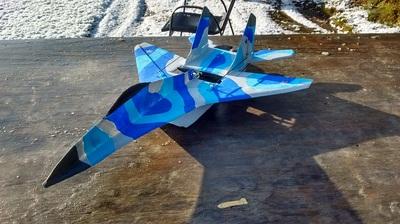
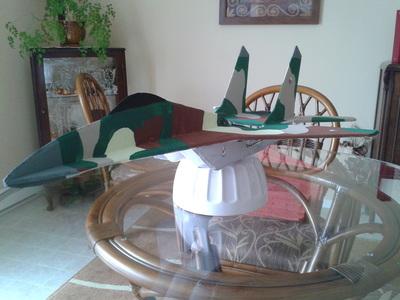
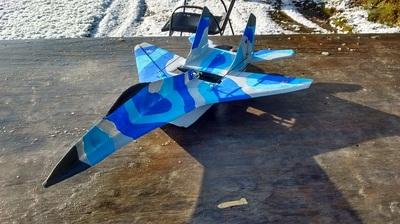
One RC Powers Mig-29 V1 ready to "slip the surly bonds of earth"😀
Here is the link to the intro blog post and the link to the video playlist where I went through the step by step build of the RC Powers Mig-29 V1 shown above.
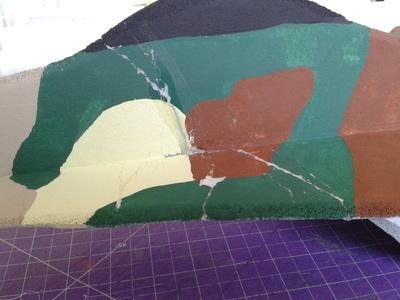
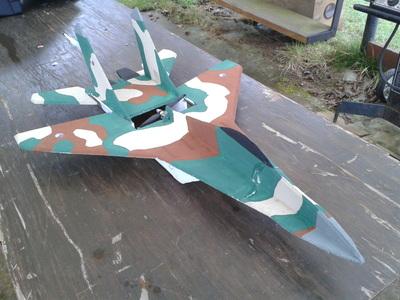
As for my own build, with a 2200 3S battery, I came in at a weight of 480 gr/16.9 oz. My build skills have come a long way in five years, this first Mig-29 V1 I built weighed 595 gr/21 oz with the same battery!😲 I used a very similar paint scheme on the new one I suppose as kind of a tribute to that first Mig-29 V1 that had such a positive impact on my park jet journey👍👏
I did make a couple of changes after shooting the video, the more I inspected the plane and checked that everything is working, the Turnigy motor I showed in the video just didn't seem to be running smoothly😒 So I swapped it out for a "no name" 2212/6 2200 kv motor from Banggood. I know from experience these motors perform the same with the same prop on 3S.
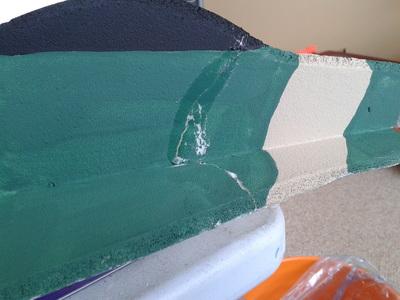
Also, as I was changing the motors, I just wasn't happy with how much flex there was in the wing plate area around the motor mount meaning a certain amount of my motor's power would get lost as the foam flexed. I used a tongue depressor and some expanding Gorilla glue and although it looks like my plane was attacked by the "Blob"💣, it is very strong now and since this is on the bottom of the plane, I won't see it much😉.
As I start doing some videos from field, I will discuss more about my maiden flights and "dialing in" my Mig-29 V1, here is a detailed video on how I normally go through this process with my park jets.
I hope that you have found this video to be helpful, if you have any questions, please leave them in the comments below, on either of the videos in this series, the first one above or the intro video or feel free to e-mail me at scott.parkjet@gmail.com. Your e-mail address will be kept in strictest confidence.
Enjoy your Mig-29 V1 build and I hope it brings you many hours of enjoyment as it has done for me over the years😀
This blog post is supporting the video I shot below which includes many of the links I discuss and is the intro to my step by step build series of the RC Powers Mig-29 V1😊
As I mentioned in an edit I did at the beginning of this video, I ended up splitting the video series into several videos as I was having a terrible time trying to upload an almost three hour video to YouTube😒 Here is the link to the playlist I created with all the videos in one place.
As a caveat, please remember that I am aiming this at folks who are very brand new to the hobby, new to building with foam and building park jets. I perhaps get a bit detailed in areas, but that is what fast forward is for😉 Many of the techniques I use have carried me through dozens of park jet builds, so they aren't just about this simple to build profile park jet, so hopefully you will be able to carry them into other builds later on.😊
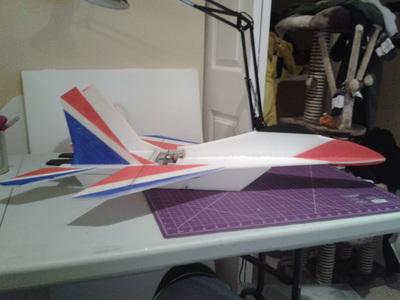
The RC Powers Mig-29 V1 has been an integral part of my park jet journey after smashing up many more complex score and fold builds. I was "trying to run before I could walk".😳 After building my first Mig-29 V1, I really turned a corner and never looked back. This is my first Mig-29 V1 built over five years ago.
I wrote this blog post article awhile ago as part of my "Which Park Jet for me" series explaining why I think the Mig-29 V1 is such a great choice for your first park jet, regardless really of your skill level.
As mentioned in the video above, if you are interested in building this great little plane, you will need to go to the RC Powers website and become a member. Here is the link to "MASTER LIST: Getting Started" page. On the very right side of the banner at the top, you will see a button called "Sign In" which should take you through the steps to sign up for an account.
If you have any difficulties, you can always e-mail them at info@rcpowers.com. Once you become a member, the free plans for the Mig-29 V1 should be under your downloads, which is a button on the right hand side of the banner at the top of the page. You will need to be signed in to your account to see this button. Again, if they don't show up rather quickly after you join, contact RC Powers at info@rcpowers.com
Next, go to the page marked Parts on the left side of the banner. This will give a great list of components and other things that RC Powers recommends and is very worthwhile reading through.
I have also done a complete video series on what I use in my park jet workshop with lots of info on components, materials, tools, etc. If you are new to building with foam, it might be worth while checking out, you can find the whole series in this playlist on my YouTube channel.
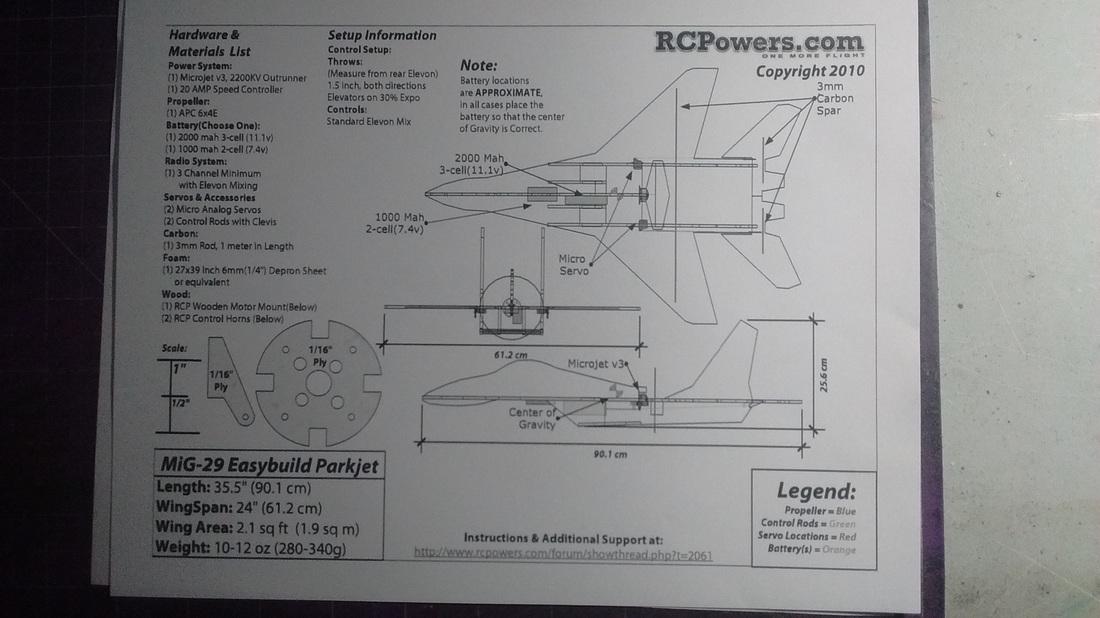
Once you have found your plans, you have two options. You can print them off on your home computer using the "tiled" plans (named as such because you "tile" the sheets of paper together to make one big sheet) as I show in the video, or take them to a print shop and have them printed on one big sheet of paper. This file is the "untiled" plans. As mentioned in the video, the planview.pdf file is no longer part of the plans, but I have permission from RC Powers to share it with you at this link. This is what the file looks like, you should be able to print it from the link, if not, please send me an e-mail at scott.parkjet@gmail.com and I can send you the pdf file. This file also has templates for the motor mount and control horns which can be made of wood or stiff plastic like an old gift card, etc.
If you decide to print the plans at home, depending on your printer, I always find the best luck selecting "shrink oversized pages" to get the plans the right size.
A good idea is to print page #8 first as it has a scale on it so you can check how close your printer is. A couple mm off either way is not important, but if it is way off, you may need to adjust your printer settings to find the setting that works best.
This same scale is on the "untiled" plans, so if you get it printed at a print shop, might be a good idea to take a ruler and check that the scale is close before leaving the shop with the plans.😊
Occasionally throughout the video series, I refer to a couple of other videos I have already done on how I install reinforcement in the foam and hinge my control surfaces. These videos are in the same playlist where you will find the video above and the step by step build video. However, I also demonstrate those processes again in the Mig-29 V1 series of videos.
As mentioned in the video above, if you are wanting to build this plane from Dollar Tree Foam (Adams readi-board), I have written a series of articles on my blog with my lessons learned.
The components that I am going to use in my Mig-29 V1 that are a bit different from the RC Powers parts list.
Motor - Banggood 2212/6 2200 Kv motor. I was originally going to use the Turnigy 2826/6 motor from Hobby King (these motors are essentially the same, just different labelling), but that motor seemed to be running a bit rough😒 I did this video which discusses this size motor nicknamed "the park jet workhorse" you might find helpful if you are very new to park jets and electrics;
ESC (electronic speed controller) - Turnigy Plush 40A. This ESC is certainly more than what this motor and prop combo need, but I find it easier to start with this size and if I decide I want to give my Mig a little power upgrade later, I don't have to chance the ESC. If you are interested, I shot this video about the Turnigy Plush ESC. 😀;
Servos - RC Timer 9 gr nylon gear servos. I know that RC Powers recommends metal gear servos, but years of experience flying park jets has taught me that these servos perform well, are very durable and the least expensive 9 gr nylon gear servos I have used. If you are interested, you can watch this video on my philosophy on servos that I use in my park jets; and
Battery - I use a few different brands of batteries, but the primary one I use is the Zippy Flightmax 2200 3S 40C battery from Hobby King. Again, this battery is probably overkill for this power setup, you can watch this video that explains my logic for using the batteries that I use.
If you have any questions, please leave them on this blog post, on any of my YouTube videos or as mentioned above, you can e-mail me at scott.parkjet@gmail.com.😀
Hi everyone - As mentioned in the last post, I wanted to discuss why I think the RC Powers Mig-29 V1is such a good choice for your first park jet regardless of your skill level and experience, but especially if you are brand new to the RC hobby. This way, hopefully if you are pretty new to the RC hobby or new to park jets, you can get started after doing a bit of research and collecting a few bits of gear and get a plane in the air before worrying too much about the other details I will write about in subsequent posts. As you read more through this thread, you will realize that this plane is not in what I consider the "ideal" size range of a 27" wingspan with the Mig-29 V1 being 24", but it just works in my experience and besides that, the plans are free as of the writing of this post, so hard to go wrong there.😉 Even though relatively small and light, the Mig-29 V1 can handle a bit of wind, say up to about 10 mph and keep flying quite well, so if you are starting off, you don't always have to wait for a dead calm day. Beyond about 10 mph winds, however, probably best not to try flying the Mig-29 V1 unless you have built up quite a bit of confidence as it can get bounced around a bit erratically in stronger winds. There is one important file that I would encourage you to open, look at and even print off on your computer that come with the Mig-29 V1 plans. The file is called "planview" and is filled with a lot of details about the recommended setup and three diagrams showing the plane side on, head on and from a "God's eye view". This is a great reference page when getting ready to build the plane and to have on hand during the build.
Other than the fact the plans are free, it is incredibly popular and well supported, here are some of the main reasons I think the Mig-29 V1 is such a great first choice for a park jet, I will go over all these points in further detail.
Extremely easy build, with all your gear gathered, you can build and fly the same day;
Very beginner friendly, flies well elevons only, with the most basic power system, even if you get "glue happy" in your build;
All the weight sits below the wing plate, giving it natural "self righting" tendencies and amazing stability, both crucial characteristics in a beginner plane;
Very easy to repair, everything is a flat surface, most repairs can be done at the field or quite easily at home, meaning you can get back in the air quickly, keep learning and having fun😃.
Easy build The Mig-29 V1 is a profile plane, in other words, it doesn't have a three dimensional type fuselage, rather a flat wing plate that is perpendicular to a flat fuselage, essentially a "+" design when you look at it head on.
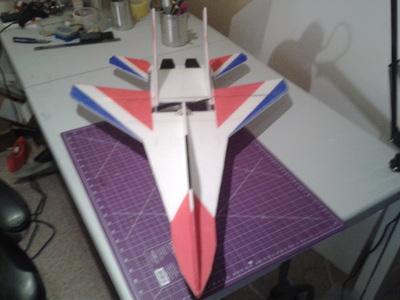
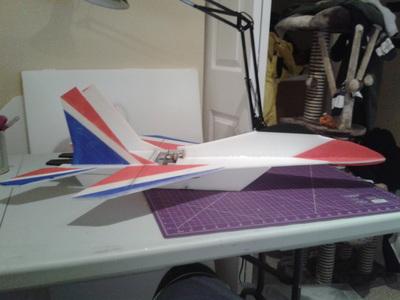
This means it has a very low "parts count", only 13 parts to cut out from the "untiled" plans and everything fits together very easily. In all honesty, you can start cutting foam after breakfast and by using hot glue and not worrying about any sort of paint job, you can be flying by the afternoon, the build is that quick. Simple control and power setup It flies amazingly well with elevons only, so only two servos needed, even if you get a little "slap happy" with the hot glue, it will fly just great with the basic 2212/6 2200 Kv motor setup and away you go. The first one I built shown in red, white and blue above weighed 539 gr/19 oz with a 2200 3S battery which is pretty heavy for a profile plane, but it still flew incredibly well and I put hundreds of flights on it before it was retired. In this old picture below, you can see I ran elevons only, and was using the Turnigy D2826/6 2200 Kv motor, one of the most popular park jet motors around. I added quite a bit of extra reinforcement as you can see, the plane was built with Depron, this probably wasn't needed, but this plane was tough and took a lot of punishment.
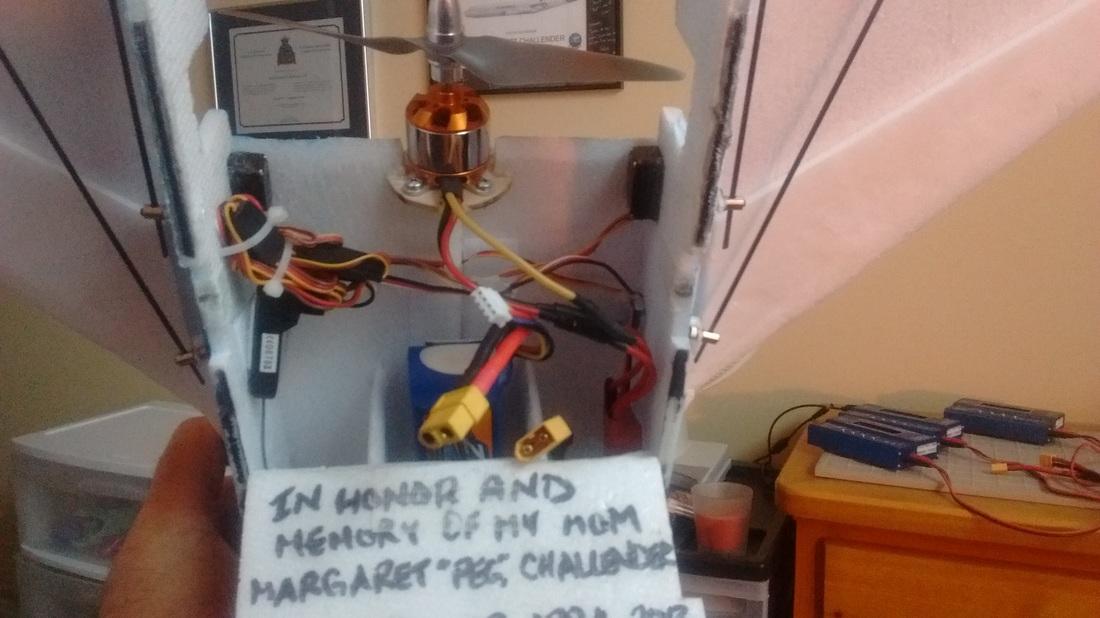
Stable and self righting Throughout this thread, you will hear me use terms like "neutral vertical balance", "top heavy" or "bottom heavy". This relates to where the majority of the weight is located in relation to the wing plate of the plane. For overall best performance and agility, neutral is the best. Top heavy is not horrible, but can cause the plane to want to flip on it's back prematurely in turns, loops, etc and can make for some really tricky flying, so not a great setup for beginners. Fortunately, the Mig-29 V1 is "bottom heavy". This gives it much better stability and "self righting" characteristics as it always has a tendency to want to roll upright, which is a great characteristic for beginners or those who want a more relaxing flight experience. Think of it like the heavy keel on a sail boat, always wanting to right the boat as it gets pushed over by wind or waves, this "bottom heavy" tendency does the same for park jets. Here you can see a picture of the electronics bay of my current Mig-29 V1 which I modified to have extra controls, all the weight is on the bottom and with the battery dead center, it makes it very stable.
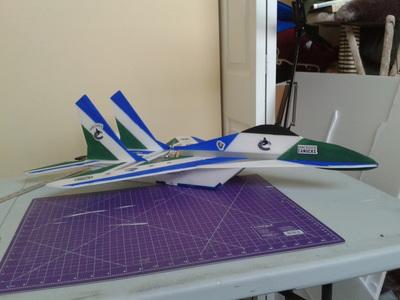
Easy to repair Over time, I built four Mig-29 V1s, they took some pretty serious punishment and all were repaired after any "mishaps". I never once had a situation in hundreds and hundreds of flights where I couldn't quickly repair the plane at the field or within an hour when I got back home. My progression of Mig-29 V1s.
Everybody likes a good "fail" video now and then... 😄
My first Mig-29 V1 "walked" away from this crash, I pulled it out of the soft ground, cleaned off the dirt and kept flying the same day 😊 I certainly would not recommend the crazy control surface throws and 3D type moves I was doing in those days when you are first starting off, but hopefully it does demonstrate that the Mig-29 V1 can be flown quite slowly, with very good control in a very small area. Part of the reason I did crash was my control surface throws were far too high, so when I panicked, pulled too much up elevator, they were acting more like brakes and contributed to my loss of control.
On a less fortunate day, even when I had much more experience, I still smacked this Mig-29 V1 into the ground pretty hard, unfortunately the ground wasn't as soft as in the video above.
Took it home, a little bit of hot glue, patched it up and it was ready to go again. I didn't paint over it, thought it was cool to display it's "battle scars" :)
Anyway, I'm not trying to bore or impress you with my "buffoonery", but hopefully you get the idea why the Mig-29 V1 is such a great starter plane. With the minimum throws to get you started, it is docile but responsive if you get into trouble. You can push your skills and gain confidence very quickly and even if you do crash, you can repair it quite easily or if things get really catastrophic and it can't be repaired, you can build another in a day, recycle the gear from the first one and continue on your park jet journey 👍 So even if you already have considerable RC experience, I don't think you can go wrong with the Mig-29 V1. Unfortunately, I did a lot of "smashing" and "crashing" of bigger, nicer score and fold planes, wasn't getting anywhere with my skills before being convinced to try the Mig-29 V1. It immediately changed my RC experience for the better as I could focus more on flying without fear of smashing up a plane that took me hours to build and might take hours to repair if I crashed. I could relax much more and simply fly. It gets you used to building with foam, setting up elevons which you will need for almost every park jet you build and gives you the experience of flying a unique mid motor mounted "prop in slot" plane. Besides, even for a very simple profile plane, it looks pretty cool, which is always an important consideration in a plane 😉
Park Jet noise...the "other" sound of freedom😎 Cheers, Scott
Hi Everyone - Yes, I know, nobody likes to do homework!😵 But as I often remember from my time in the Air Force, "people don't plan to fail, they fail to plan". There is certainly a lot to be said for doing some research before building your first park jet or in fact if you already have built one, doing some research before building your next one.
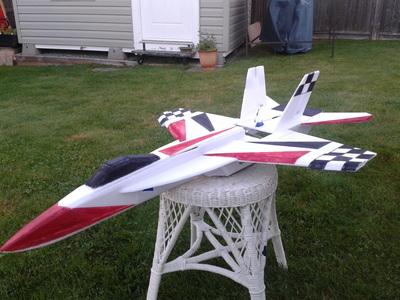
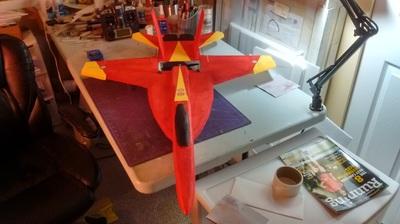
My intent is not to be overly blunt or insult anybody's intelligence with my advice and recommendations, but hopefully try to set you up for success.😎 I still see far too many guys jumping on the RC Powers forum, buying plans for a plane, starting a new thread every time an idea pops into their head and really never getting anywhere and they sometimes give up or never have the success they could have if they did a little work on their own. I know it is tough when you are excited to get started on your first park jet or even the new "hot jet" that has just been released to resist the excitement (been there, done that😭), but a bit of time spent preparing can often save a lot of fried and frustration😊 Unfortunately, the less experience you have, I think the more study is required to ensure best success when taking the test with your first park jet flight😐 Also, I think it prudent to do some work to educate yourself so that when you do need to ask a question, you can do it with some knowledge and ask much better questions to get the answers you seek. From hard earned experience, I know it will get you where you need to be much more quickly with hopefully greatly reduced frustration and embarrassment. Also, it will give you a far better idea of what materials, components, etc you need to acquire before you can build your first park jet. Long term, building and flying foam park jets is one of the most economical ways to enjoy the RC flying hobby, but there is a certain amount of money you will need to spend to get started and set yourself up for success long term. The great thing is once you have a couple motors, ESCs, batteries and a handful of servos, you can recycle them into follow on planes which greatly reduces the cost over time. I know for a fact I have components, pushrods, carbon reinforcement that has been in at least a half dozen planes and is still going strong. I like to think of the park jet part of the RC hobby as having a very high "fun to dollar" ratio. In other words, a whole lot of fun for very little outlay of money and very little building time to get you in the air. If you haven't already, I would strongly encourage you to join the RC Powers forum. It is free to join and there is no requirement to post at any time, but as soon as you join, you get access to free plans for the Mig-29 V1 and F-18 V3 which are the two planes I strongly recommend you try as your first park jets, especially if you are brand new to the hobby. Here are a couple of pictures of my favorite Mig-29 V1 and F-18 V3. I literally put hundreds on flights on each of these airplanes, nothing fancy about the paint schemes, but the skills and confidence I gained from these planes was crucial to my development as a park jet builder and pilot.
Once you have access to these free plans or any plans you may purchase or get for free, I strongly recommend saving them to a thumb/flash drive so you will always have them, no matter what happens to the website you download them from. Also, it makes it easier if you need to take them to a professional printer to have them printed if you have them saved on a portable memory device. Although the RC Powers threads may seem lengthy, I would recommend taking the time to sit down with your favorite beverage and some snacks and have a read through them. You don't necessarily need to do it all in one day or even read the entire thing, but very quickly you should get an idea of what setups have worked best for folks from the most basic to the most advanced.
You might also get an idea what guys you might go to for questions or advice based on how they have written their comments, feedback or provided advice to others. Of course it is like any internet forum, you will have your good guys and your not so good guys, sometimes you just have to figure that out on your own. Quite honestly, you will probably find about 25% or more of it is just mindless chatter between members which you can just skim through. But as I mentioned before, you don't have to interact with anybody if you don't want to and you can still learn a lot. I would actually go to the "parts" or "getting started" page on the RC Powers forum to get an idea of what they recommend to do. This could save you a lot of grief before you start ordering goodies and cutting foam. The embedded search function on the RC Powers page located up towards the top right is also very good and will take you to the subject you want to research pretty easily. Many people fail to use this and start threads or ask questions about topics that have been covered over and over and over and often suffer the wrath of less patient members, making their experiences less than positive. Anyway, enough of my rant on the RC Powers forum, I certainly have had my ups and downs with the forum in my time, but if you want to learn about park jets, it is definitely a rich gold mine of information. As I mentioned in the first post, here are some questions you might start asking yourself as you decide what park jet might be right for you. As I mentioned, try to be as honest with yourself as you can when answering, it might save you a lot of time and frustration. Of course if you are brand new to the hobby, perhaps you don't know the answers, but do your best 😊
What are your flying preferences?
Do you want a plane that is forgiving and relatively easy to fly?
Do you want to challenge yourself, flying a plane that is a bit more difficult to fly but perhaps more aerobatic?
Do you go for scale looks over performance or the other way around?
Do you want a plane that is versatile and able to handle a wide range of power setups, wind conditions and has a large flight envelope (in other words flies well from quite slow to very fast in just about any environment)?
What are your normal flying conditions?
Do you fly at a smaller field where having a plane that you can keep close to you is important?
Do you normally fly in windy conditions (in other words anything but dead calm winds)
Is the plane I want to build popular and well supported?
Does the designer provide instructions you can follow, or are you going to be pretty much on your own? Some designers provide very detailed instructions, others a few build pictures with little explanation, so it might be important to assess how self sufficient you can be in your build before selecting a certain plane.
Have lots of other guys built it and enjoyed it? Of course with every plane you will get guys who love and hate it, but in general, has it been a successful design and good flier? The Mig-29 V1 for example has been around for over eight years which is amazing for a park jet, the F-18 V3 has been around for over four years and they are still the most popular planes for guys getting started. I don't have room for either of them in my "hangar" these days, but I have built several of each of them, enjoyed them thoroughly and learned a lot as I went along. These are pictures of the last Mig-29 V1 and F-18 V3 I built, lots of mods and updates since the first ones pictured above, but still amazing flying planes.
I suppose I could go on forever, but hopefully you get the point. One other question I would ask myself is "what transmitter to look for or if I have one, how well do I know how to use it?" You don't need a terribly complicated transmitter to enjoy most park jets, but if you have something too simple, you are probably going to need to consider on board mixers which can make your control setups a bit more complicated, take up more room in your plane and add unnecessary weight. So you don't necessarily need to splash out hundreds of dollars on an overly complicated and capable transmitter, ask around, shop around and you can get set up with a good radio you can "grow" into that should meet all your park jet needs.
You Tube is an excellent source of information I have found, lots of reviews and comparisons available. What you want to try and avoid is what I did, I started off with a Spectrum Dx6i which is a good basic transmitter, but has limited mixing functions. I quickly outgrew it and then had to buy a second transmitter just to be able to keep up with the complexity of my setups as my skills and desire for more advanced setups increased. If you already have a transmitter, I would suggest learning how to set up mixes in it and start playing around with those. Almost every park jet I have ever flown will fly well with elevons only, so if nothing else, learn if your transmitter is capable of doing that and how to set those up. I hope that I haven't scared you away from thinking of building and flying a park jet, as I mentioned in the opening paragraph, I am only being a bit blunt to hopefully prevent you from making many of the same mistakes I have made or that I see others repeating over and over. Some research before spending any money doesn't cost anything but some time and in the long run will hopefully set you up for success, save you some stress and frustration and get you on your way to flying and enjoying a cool park jet. I shot this video awhile ago and although a couple of the items I discuss I don't use any longer, hopefully it will give you an idea of how my park jet workshop is set up after much trial and error to get the goodies and products that work for me. It is quite lengthy and detailed, but that is what fast forward is for :) Also, if you watch on You Tube, you can find the index to the video that will allow you to navigate around to find the subject or subjects that you are interested in most.
So I encourage you to get busy reading, watching and thinking about which park jet you want to build first or next depending on where you are in the hobby.
In the next two articles, I will discuss why I think the RC Powers Mig-29 V1 and F-18 V3 are such good choices for starter park jets. They do have some qualities that are different from what I will discuss throughout the rest of this series, but they are proven airplanes, quite straight forward to build, quite beginner friendly and a lot of fun to fly regardless of your RC experience level.
Follow on articles will then start to discuss specific qualities and behaviors of park jet design and features that may help you in your park jet choices in the future.
Park Jet noise...the "other" sound of freedom😎 Cheers, Scott